



Quick Answer: What is mental stimulation for dogs?
What it is: Mental stimulation for dogs involves activities like scent work, puzzles, training, and interactive play that challenge their brains.
Why it matters: Regular mental enrichment helps reduce boredom and related behaviors like excessive barking, chewing, and digging.
How to get started: Try simple enrichment activities like hiding treats, using puzzle toys, practicing new commands, or taking sniff-focused walks.
Does your dog still seem restless after a long walk or a full day of play? Physical exercise is important, but dogs also need mental stimulation to stay engaged and avoid boredom. Adding activities that challenge their minds can help them feel more fulfilled and relaxed.
At Playtime Pet Resort, our team provides supervised dog daycare and boarding, giving us firsthand experience with their social and enrichment needs. Below, we'll cover 10 easy ways to keep your dog's mind active, from indoor games and puzzle toys to outdoor adventures and training exercises.
What Is Mental Stimulation for Dogs?
Mental stimulation for dogs involves activities that encourage them to think, solve problems, use their senses, and learn new skills. Unlike physical exercise, which focuses on movement, mental stimulation challenges a dog's brain through activities like scent games, puzzles, and training.
Mental stimulation is one part of dog enrichment, which includes physical, social, sensory, and problem-solving activities. These experiences let dogs explore their surroundings, practice natural behaviors, and stay engaged throughout the day.
Mental Stimulation vs. Physical Exercise: What's the Difference?
Physical exercise, like running or playing fetch, keeps your dog active, while mental stimulation challenges their thinking and problem-solving skills. Both are important, especially for high-energy and working breeds that may still benefit from mental challenges after physical activity.
Signs Your Dog Needs More Mental Stimulation
Dogs that aren't getting enough mental enrichment may show signs of boredom, including excessive barking, destructive chewing, digging, or constant attention-seeking. Other signs include pacing, restlessness, and difficulty settling down after exercise. However, these behaviors can also indicate anxiety or medical concerns, so persistent or sudden changes warrant a conversation with your veterinarian.
Why Mental Stimulation Matters for Your Dog's Health and Behavior
Regular mental enrichment encourages healthy behavior and supports your dog's overall well-being.
Key benefits include:
Reduces destructive behavior: Mental activities provide an outlet for boredom that might otherwise lead to chewing, digging, or excessive barking.
Helps manage stress and anxiety: Scent games, puzzles, and familiar activities encourage relaxation and provide rewarding mental challenges.
Supports senior dogs: Age-appropriate puzzles and training keep older dogs mentally engaged as their physical abilities change.
Strengthens your bond: Interactive games and training reinforce communication, trust, and positive behavior.
Builds confidence in new environments: Positive experiences with new activities and routines can make unfamiliar settings less intimidating. Gradual exposure can also prepare your dog for daycare or boarding.
10 Enrichment Activities and Games to Try at Home
You don't need expensive equipment to keep your dog's mind active. These enrichment activities for dogs offer simple ways to encourage problem-solving, satisfy natural instincts, and prevent boredom.
Scent Work and Nose Games
Dogs rely heavily on their sense of smell, making scent games a great way to challenge their brains. Try these activities:
Find It: Hide treats around your home and encourage your dog to sniff them out.
Muffin-Tin Puzzle: Place treats in a muffin tin and cover them with tennis balls for your dog to uncover.
Snuffle Mat: Scatter kibble through a fabric snuffle mat to encourage searching and foraging.
Tip: These low-impact activities are especially useful for senior dogs or those with limited mobility. For dogs recovering from injuries, check with your veterinarian before introducing new games.
Puzzle Toys and Food Dispensers
Interactive toys turn mealtime into a problem-solving activity. Some of the best mental stimulation toys for dogs include:
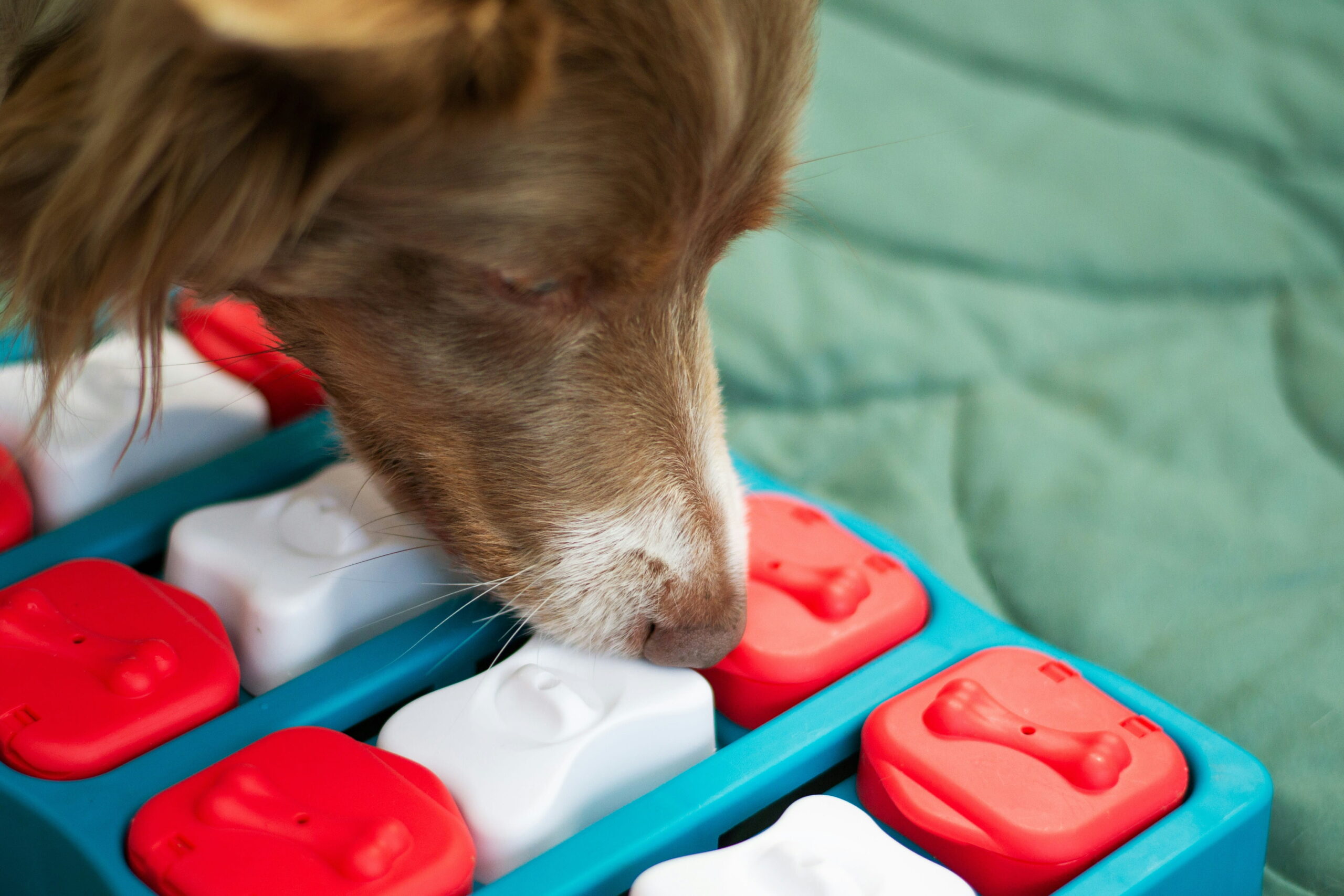
Food Puzzles: Use sliding compartments or rotating pieces that your dog must move to uncover treats.
Stuffed Toys and Lick Mats: Fill durable rubber toys or lick mats with dog-safe food to encourage focused engagement.
Tip: Start with beginner puzzles before introducing more challenging, multi-step designs. The goal of dog mental enrichment activities is to keep them interested without causing frustration.
Training Games and Obedience Challenges
Short training sessions are excellent mental stimulation games for dogs. Even 10–15 minutes of focused practice gives your dog an opportunity to think, learn, and interact with you.
Hide-and-Seek: Hide somewhere in your home, call your dog, and reward them when they find you.
Which Hand?: Hide a treat in one hand and let your dog sniff out the correct choice.
Trick Training: Practice new commands or combine familiar tricks into short sequences.
Tip: Keep sessions positive and reward progress. For more ideas, review our guide to basic obedience games.
Interactive Play and Social Enrichment
Interactive play combines physical activity with mental challenges while strengthening your dog's social skills.
Structured Play: Add simple rules to games like tug-of-war or fetch, such as asking your dog to sit before throwing a toy. Supervised play with compatible dogs
also provides valuable social enrichment.
Tip: Playtime Pet Resort's dog daycare program offers supervised group play where dogs can engage with compatible playmates.
Environmental Enrichment (Indoor and Outdoor)
Changing your dog's surroundings introduces new sights, smells, and experiences that keep their mind engaged.
Sniff Walks and New Experiences: Let your dog stop and explore scents during walks instead of focusing only on distance. Indoors, introduce safe new objects, change familiar play areas, or provide a comfortable window-viewing spot for added stimulation.
Tip: Even small changes to your dog's daily environment can encourage curiosity and provide mental enrichment without requiring extra equipment.
Best Mental Stimulation for Dogs: What Toys to Look For
When choosing toys for mental stimulation for dogs, consider these factors:
Safety: Choose non-toxic, size-appropriate toys without small parts your dog could swallow. Supervise play, especially with new toys.
Difficulty level: Start with simple puzzles your dog can solve before moving to more challenging designs. If your dog loses interest or becomes frustrated, try an easier option.
Play preferences: Durable rubber feeders work well for chewers, sliding puzzles challenge problem-solvers, and snuffle mats encourage dogs that love sniffing.
Durability: Choose sturdy materials that can withstand your dog's chewing habits. Replace toys that crack or come loose.
Variety: Rotate a few toys throughout the week to keep activities interesting and prevent your dog from losing interest.
At Playtime Pet Resort, we proudly offer Woof products, including the Woof Pupsicle, a refillable dog enrichment toy that provides interactive stimulation for 20 to 60 minutes.
Common Mistakes When Providing Mental Stimulation for Dogs
Mental enrichment works best when activities match your dog's needs and become part of their daily routine. Avoid these common mistakes:
Confusing physical exhaustion with mental stimulation: A long walk may tire your dog's body, but they still need activities that challenge their brain.
Choosing activities that are too difficult: Complicated puzzles can frustrate dogs and cause them to lose interest. Start simple and gradually increase the difficulty.
Skipping daily enrichment: Occasional activities aren't enough to establish a consistent routine. Aim for short, engaging sessions every day.
Ignoring breed-specific needs: Herding breeds like Border Collies often enjoy problem-solving tasks, while scent-driven breeds like Beagles benefit from nose games. Choose activities based on your dog's natural instincts and interests.
Relying only on food rewards: Not every dog is motivated by treats. Include interactive play, toys, praise, and social activities to keep enrichment varied.
Overlooking mental stimulation altogether: Enrichment is an important part of your dog's daily well-being, especially for active breeds that need regular mental challenges.
FAQs About Mental Stimulation for Dogs
What is 15 minutes of mental stimulation for dogs?
A 15-minute session might include five minutes of scent games, five minutes with a puzzle toy, and five minutes practicing commands. Short, focused activities challenge dogs mentally without overwhelming them.
How do you tire your dog out mentally?
Try scent games, puzzle feeders, hide-and-seek, or teaching new tricks. These activities encourage problem-solving and can leave your dog feeling mentally satisfied.
How do you know if your dog is mentally stimulated enough?
Dogs receiving enough enrichment often settle comfortably after activities and show fewer boredom-related behaviors. Frequent barking, destructive chewing, or restlessness may mean your dog needs more stimulation.
How can you provide mental stimulation for dogs every day?
If you're wondering how to provide mental stimulation for dogs consistently, start with short daily activities like hiding treats, practicing commands, or taking sniff-focused walks. Rotate activities to keep your dog interested....